

Having an Healthy Lifestyle is an All or None Rule
We do believe in pursuing a healthy lifestyle. If you don't love yourself, your body, your mind and your life, you won't be able to love and respect other living beings.
We believe this is an "all or none rule". This means that if you care about having a healthy lifestyle you need to do everything it takes to commit to that. This also includes being consistent with your choice on everything that comes along with that, in each life's sphere. One cannot abuse with sugar and cosmetics but stay away from cannabis because it's "bad" with his/her health. It doesn't make any sense to destroy your body by abusing with something and preserve it from some other damaging sources.
Health System
We try to avoid using the "easy pill" that developed countries' health systems are constantly proposing us. We try to be as natural as possible avoiding, when possible (ie. when no accidents occur), the use of any pharmaceutical product, doctors or hospitals.
We drastically avoid excesses with substances that harms our body, mind and our mental lucidiy. E.g. salt, sugar (included excessing with carbs), nicotine, caffeine (yes, coffee), alcohol, drugs (legal and illegal), etc.

We love our body and mind as it's the main instrument for our happiness, we don't throw that crap into our bodies letting our minds being affected by that.
Yes, we know, we included coffee and sugar in the list. Caffeine is a chemical substance that jeopardises the natural flow of our mind. This nice video here will show you how your brain get easily addicted to it here. Last but not least, caffeine is an agitating substance... and as explained here, we prefer to slow down our life, not to stress it.
Therefore we stay away from that too. We prefer herbal tea or Japanese green tea. The same exact principle goes with the abuse of sugar. Your mind get easily addicted to it and your lucidy is jeopardized.
Body
We love our body. We like to explore what is capable of and challenge ourselves.
We embrace any bodily art that makes us feel good physically and mentally. This can be any sports activities, walking, yoga, meditation, breathing exercises, body care, sleep (oh yes... incredible that there is the need to write it down here!).
We consider any activity that is using our body but respecting it (ie. we don't consider driving a car a sport and we don't put ourselves into extreme long efforts like doing an Ironman).
We don't let ourselves becoming addicted to any bodily activity that could ruin our body in the long term. After all, our body is the home hosting our mind.
Cosmetics
We simply avoid cosmetics as much as possible.
We are who we are, dot.
We don't try to run away from that.
Spending time, effort, energy in trying to "improve our look" or, worst, trying to look like someone else, doesn't make much sense for the pursuit of our happiness.
Last but not least, we like to connect dots and learn from history. We don't trust any company producing cosmetics and marketise them as solutions at all. This includes shampoo, toothpaste, mouthwash, deodorant, perfume, etc.
We try as much to avoid that or do it ourselves at home.
Nutrition
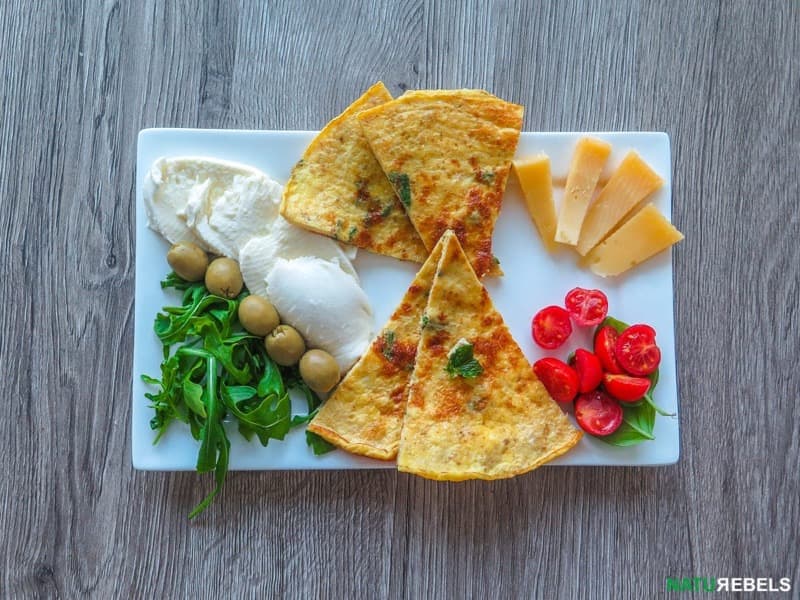
Source: Naturebels.com
Nutrition supports our life as much as roots support a tree.
We avoid fast food, any kind of chunk food, frozen food, "microwave food", etc. For us, this is simply not food and represent the apogee of a failing society.
We only eat vegetarian food, when we can vegan food, without allowing this to over-complicate our lives. It is good to support our natural environement and our health, but we need to take into account that the preservation of our mental equilibrium and desires satisfaction is also of core importance for an happy life. We love also to focus on local and seasonal production only, when possible.
Also, we try to cook ourselves as much as possible rather than paying for someone else to do that (to gather more control over what we eat).
Here you can get some wonderful receipts ideas of, mainly vegetarian, natural and local food.
It's not because coca-cola is the first drink that pops in your mind at the restaurant when you sit down that you can't ask for a locally-produced fresh drink to the waiter. We are not instinct driven beasts anymore, we are rational thinking beings.
A small (and nowadays outside-the-box) choice like that can help your mind (less sugar = more lucidity), your body (trust us, your body will say thanks to that too), your energy, your environment and your wallet :).
Grow our Food
Growing our vegetables in an organic garden allows us to figure out how difficult it is for nature to produce the food you eat. Being aware of that generates enormous respect for nature and its production rythms. As a consequence, a 0-waste vision on food is automatically triggered.
If we don't have a piece of land where to grow your vegetables, an indoor hydroponic grow box can easily be set up.
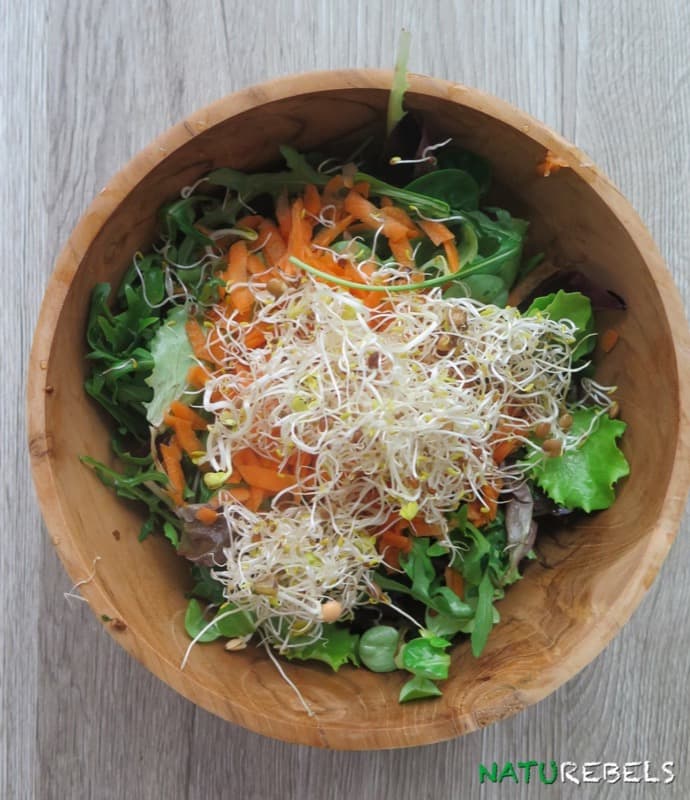
Source: Naturebels.com
To conclude, we strongly believe that nowadays it's not difficult to pursue a healthy lifestyle, it's just a matter of knowledge and determination. An informed and smart individual will not find difficult to nurture his/her body with good substances rather than with some of the current (largely-diffused) society's poisons.

Gift Economy would Crash Economic and Social System
Cybersecurity research, Wikipedia, most of the www and any open source project are all examples of gift economy or based on gift culture.
Gift economy tends to work better in the digital world, as giving away something won't impact much the giver. We support the idea that gift culture should also be an integral and primordial part of our" offline" economic and social system.
Our economic and social system is based upon pushing individuals to transform their endeavours into economic outputs. The system is then maintaining its control on individuals leveraging on those economic outputs (e.g. sustain itself, punish, alienate, propaganda,...).
When this is possible and makes sense, rather than selling items we prefer gift giving. This way, we reject the ownership and the power and control that are raised from selling our stuff. Contrairly, giving gifts allow for people to use their endeavours just for the good of others who get them. This makes us feel much more satisfied, gratified and has a deeper positive impact on happiness.
We believe a society where people exchange gifts, stuff or barter things, is a much more happy one. Our community support that.
11 cyber security tips to protect your privacy [for digital nomads]
Traveling the world is maybe the best gift you can make to yourself. If you do it properly, it’s probably gonna be one of the most deeply moving experience you can do in your entire life. Nevertheless, it can quickly turn out very bad. Something can happen that totally or partially screw this amazing experience of yours. This is why you may need these cyber security tips to safeguard your privacy even abroad.
It may be someone stealing your camera with all your photos, skimming your CC, cloning your passport or, worst, severely injure yourself. Contrarily of what most people may think, those things don't happen randomly. Of course, they can happen to everybody but often you can prevent or avoid them with small hacks, proper behavior and tricks.
The key is first to know those tricks, hacks or behaviors and secondly to get used to always apply them during your travel away from home. Chances that problems and negative consequences arise from a particular event that may happen, will be dramatically reduced.
This is even truer when it comes to the digital world. As a digital nomad, your work and travel depend on the digital world.
I have been on all 5 continents, traveled for years around the globe and submerged myself in many different cultures and, unbelievably, always without a smartphone.
I have a large, general and deep background about anything being digital, despite I love the real "offline" world much more :).
Here you can read an incomplete list of hacks, tricks and advises about cybersecurity specifically thought for my fellow travellers and digital nomads who may ignore them.
I hope they can help you as they are still helping me protecting my privacy and my digital world on the go.
I am also writing a list of tricks about personal belonging safety, personal health and personal security. Be patient, I will publish them soon. Those tricks are usually universal and you can apply them on any trip that sees you exploring the world far from home.
I divided those tricks into two main sections:
> useful Before you leave for your trip (e.g. what to buy, useful items, actions to do before departure,…) and
> useful During your stay away from home (e.g. once arrived at your destination)
Without further due, here it is, feel free to print this list and/or bookmark it.
> Before you leave for your trip and to bring with you
1) Show a message for who stole / will find your laptop
People rarely think about this small trick but can be super useful. Especially on MAC but also on PC, you can prompt a message like the following one on the login screen. This is showed after power on and when resuming standby or hibernation:
[su_note note_color="#f2f2f2" text_color=“#000000” radius="3" class="p_tip"] If you have found this computer or stole it, please write an email to xxxxx@gmail.com OR xxxxxxx@yahoo.com. A nice and conspicuous reward is surely waiting for you when you bring it back, HIGHER than the value of the laptop. Thanks. P.S. All personal data is hardly encrypted, so don’t even bother trying accessing it.[/su_note]
Mac users can use OnyX to do that (and many other things).
2) Encrypt your data and pick a long and strong password
Encrypt all your files on your laptop or smartphone in ALL partitions. Here some instructions on how to do that on Mac Os X. Above all, the one used by the OS. Encrypt all your USB sticks, external SSD, etc !!!
This way, no matter if your laptop gets lost, broken or not under your control (e.g. repair shop) or even stolen, nobody will be able to access your personal info and files without the password.
It's highly advised to choose AES encryption method as it's the most secure. Despite there is a very nice conversation you definitely should follow on Stack Exchange about how AES could be breakable by large three letters US agencies.
Read the brief section at the bottom of this page about how to pick a secure password **.
3) Password-protect your laptop (incl. after standby)
If you don't do this step, anyone picking your laptop (e.g. going to the toilet on a co-working space) and/or powering it up or resuming it after the standby, will access your data.
Protect it with a password, also after standby or hibernation so you are sure nobody will be able to access your data.
Read the brief section at the bottom of this page about how to pick a secure password **.
4) Have all of your passwords in a list that you own
Write all your personal info and passwords in a well-encrypted file (or software) accessible online AND offline. I personally prefer a Libre Office excel spreadsheet in an encrypted cloud-storage. Free software and much more privacy-respectful than the more known Microsoft Office.
In the one hand, online password management software like Last Pass is cool and practical but I honestly don't trust them much. Not good to have all of your private files protected by passwords located in a remote destination you have no control at all :).
On the other hand, don't store all of your passwords offline only, you may:
- lose your notebook and may need to access your personal info
- break your main SSD and lose your password file forever
- loose all of your belongings (included your laptop) because of theft and you need to reserve your flight back home from an internet point
5) Pick a Cloud-storage privacy respectful
Honestly, forget Google, Microsoft, Dropbox, etc.
Pick a seriously European-based privacy-respecting cloud storage with 0 knowledge policy and a serious encryption cypher.
I know, it’s hard to find one but after a few trial and errors, I finally found one: tresorit.
Don’t try to find a “free solution” to avoid paying a cloud storage provider… with any free solution, your data will be the business. As simple as that.
If your reason for not purchasing a paid cloud storage is “I don't have that money”… well, I have a few solutions for you.
By following all or part of the below tactics you can spare the needed money in just a week or a month (depending on your habits and mental strength), allowing you to purchase the annual plan:
a) spare money by decreasing the expenses of your car, camera, clothes, accessories or other items;
b) decrease outing or fun activities;
c) decrease eating frequency and/or quantity;
d) learn about “fasting”, it will allow you to become stronger, spare that money and gain on health.
Many people don’t realize that in today’s era, your personal data and privacy is much more valuable, important and scarce than what you may think and once is lost is lost forever or can generate huge problems (ie. identity thief, documents loss, etc).
Obviously, your protection is directly proportional to the difficulty of the password you choose, so pick a difficult one. Read the brief section at the bottom of this page about how to pick a secure password **.
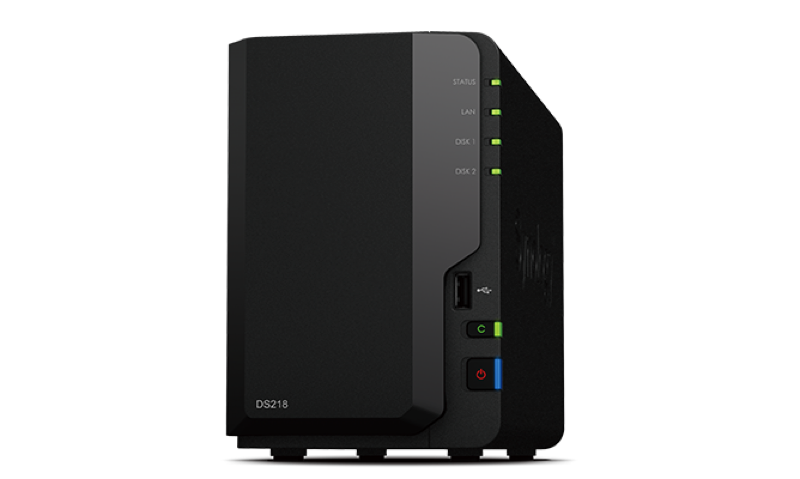
6) Get a NAS to store all of your big files (videos, photos, music,..)
A Network Attached Storage is basically an Enclosure where you can put a hard drive and link it to your home network to store all of your files. It is a good alternative vs. having cloud-based storage. The storage capacity depends on the hard drive(s) you put inside it.
Normally you locate a NAS at home or office and you turn it off, dramatically increasing the security of your files vs. a remote cloud-based service owned by a company where you have no control.
You can turn it on and off and access your files wherever you are in the world just by logging in to it as it was a website.
Personally, I prefer the brand Synology as its NAS are secure, reliable, fast and very versatile. I also prefer Seagate's hard drive family called Barracuda to be inserted in the Synology NAS you will pick. Follow this link to see the compatibility list.
A NAS doesn’t need complex configurations or installation procedures and you don’t need to be skilled on IT to install one. You just purchase your enclosure (your NAS), put one or more HDD inside (easy 2-minutes procedure), plug and turn on... :)
If you are interested in buying one and also want to support me, I did my research and found out that this is a very nice model to have in 2019 for a digital nomad or traveller.
All in all, it will cost you around 150 € and if you purchase from the top link, the price will be the same for you, but I will gain a commission from Amazon (thanks! :).
7) Get a free / paid firewall
It may trigger you an “I am not sure”... trust me, it worth doing it.
Once installed, it won’t disturb you much and just add an important layer of security on the main task any digital nomad do with his/her laptop: surfing the internet.
Keep in mind that when you travel, you are often recognized as being foreigner or tourist so you often are the target of scams and cyber attacks.
Also, the risks or the consequences of not having a firewall are much worse when you live out of your lovely home (e.g. depending on public wi-fi, a country less cyber secure,...).
Little Snitch is the top firewall you can have for MAC, but I find it a bit expensive. Radio Silence is a cheaper alternative that does the work, despite being much more simple.
8) Create your needed accounts at home
During your travel, you probably gonna use some accounts to manage your finance, accommodation, etc.
E.g. agoda.com, booking.com, airbnb.com, visited the nation’s public transportation website, credit-card companies, banks, etc.
To put it simply, it’s faster, better and more secure if you do all of that at home. So during your stay, you just need to log in with the pre-saved password (no need to verify your phone, transmit important data via public wifi, get through complicated registration processes or email verification procedures :)
> During your travel, while you stay away from home
9) Avoid internet points
Not all, but many of them in developed countries have computers voluntarily or involuntarily full of viruses, worms and/or keyloggers. Or they simply intercept any traffic passing through their router. Try to use them IF you don’t have to input personal info only or in case of an emergency. Pay attention that keyloggers may register any information you just input through your keyboard, so you don’t need to be on the browser for them to steal your sensitive info.
Tip: ask the responsible person to use his/her main computer instead. Offer him/her a conspicuous tip for this and don't say “I want / can pay more on top of the normal price” but more “I will give you a nice TIP for you only if I can use the main computer or the one you are using”. :) Of course, you are not 100% sure that that computer is not affected, but the probability decreases a bit.
10) Backup on multiple devices located on different spots
Useless to say that it's better if you constantly backup your data when traveling :).
When you travel you always have different places where you store your loved data (included your trip’s photos). Eg. on your laptop’s internal SSD, your camera (SD card), USB-stick, smartphone, cloud storage, micro-sd on your wallet,…
Also, you have different locations where you may place those storage devices: your main backpack, small bag, marsupium, hidden wallet, main wallet, keychain….
Well, my only 2 advises here are:
- always keep a copy of your data into at least 2 different storage devices (3 if you are a maniac :))
- placed in at least 2 separated locations (3 if you are a maniac :))
11) Use a VPN and SSL on public-wifi
3 small advises to Stay completely secure when using public Wi-Fi.
a) VEEEERY important: don’t use a good VPN, use an EXCELLENT VPN.
After having tried many VPN, I am stuck now for years with ProtonVPN. They have an excellent service, always up, amazing customer service and they have their servers based in a Swiss bunker :). Also, they have a combo package for about 100 € / year where you can get their secure and encrypted email service AND the VPN. All Switzerland-based.
b) Always be sure to send your personal info only through SSL-encryption via your browser (through a glance at your URL bar... ie. green lock on Firefox).
c) Use a privacy-respecting browser like Epic (or TOR browser) for more sensitive searches and important transactions and firefox for the rest.
** A strong password doesn’t have to be difficult to memorize or super complicated to be set.
Follow some memorable patterns (semantic or musical or even visual, depending on your preferred sense). Here is some quick advice you can immediately follow:
- length is KING. The longer the password is better it is. 8-14 ch password is medium strong. I love to pick at least 20+ characters password - length. If the quantum computer is not invented, it will be almost impossible to break the password (pls, read the following to have an impossible-to-break password).
- a combination of letters, numbers and special characters
- mix small and capital of the above
- mix different languages
- pick words that have a special meaning for you and isn’t in any dictionary
- pick an outside-the-box or strange pattern (not xxxxxx12 or xxxxx12344, those are an example of typical easily crackable patterns)
Someone still uses substitutes like $ for S or € for euro but they don’t protect anymore, better to follow above advises try to use different passwords for different accounts
6-months in South-East Asia: Essential Travel Checklist [Digital Nomads]
I was heading to South-East Asia for a 6-7 month's long trip, this post depicts my travel checklist.
I only wanted to use cabin hand luggage as more practical and quick.
So, I purchased a very small backpack (36L) (see below in the list which model I purchased) and tried to stay within a 7 Kg max total weight, being this AirAsia's, ridiculous, hand baggage allowance
Also, this is mostly a MALE travel checklist but you can read about the female version of the 7 Kg backpack here.
If you don't wanna read the introductory part (not recommended as I think you could learn some stuff), click here to jump to the section where I list all the essential items to bring in your 7 Kg-max backpack if you are a digital nomad.
What other blogs write about travel essentials
Initially, I was packing my backpack pretty much as everyone would do nowadays. Looking around to see what you already have, brainstorm, write an initial travel checklist, reading guides/blogs, completing it… and then try to fit all the monkeys into the best-rated backpack that would fit into the aeroplane hand luggage cabin.
I read a lot of advice and "ultimate travel checklist" from many smart people and tough travellers.... but, IMHO, they all miss an important point in their super exhaustive posts and lists. I explained that point on in this post.
In short (and maybe exaggerating a bit :))... they all advise you to bring:
- any artefact that would allow you to stay alive in case of the end of the world (ie. water purification pills, swiss knife, ultra-tech headlight,...)
- A huge amount of Toiletries as you had to win a beauty contest(perfumes, deodorants, razors, personal hygiene stuff,...)
- any object that would avoid you to get into trouble in the unknown world (Asia) (ie. mosquito net, hand sanitizer, poncho,...)
- a whole set of objects that they tell you is at the core of your needs when travelling (GPS, smartphone, lonely planet,...)
- a whole pharmacy... so to avoid dying on a street corner (plasters, anti-malaria pills, disinfectant,...)
- super-duper-powerful thermal, water resistant, windproof and ultralight clothes
- a bunch of "organizers" were to fit all the useless stuff above :)
My point is very simple...
... if you follow each and every group of their travel checklist you will certainly survive, but just that.
You won't live your journey.
You won't be your journey,
nor it will transform or change you
as you will just bring all your comfort zone with you!
I wrote an entire post just about that, about the Aha! moment I had while packing this backpack and why I consider its conclusion as THE most important thing when creating the checklist for such travel.
If you don't want to read the above-linked post, in short, what I found out is that you should stop forward-thinking while preparing your backpack. Don't try to forecast what could happen and pack an object to possibly mitigate that event.... this will just make you become more stupid and more dependent on an easy pill.
Instead, make your brain working to solve the problem and/or get in touch with locals and scan the local environment to find a solution.
My minimal packing list for South-East Asia
The big issue was that to travel by plane with AirAsia, luggage needed to be less than 7 Kg in total. Also, it didn't help the fact that I am a digital nomad, so you need all a bunch of equipment to be able to work (laptop, charger, business cards, backup drive, documents,...) that you don't need if you are just living a 10-days holiday.
I thought that to prepare such minimal backpack, "just" required me to solve a bunch of practical problems: space, size, selection, weight, etc. and I thought I had the basic skills to solve them: strict decision-making process, strong imagination, creativity, troubleshooting,…. I was so wrong :).
A mixture of the above and my rationalism pushed me to weight every single item and list them in an excel spreadsheet.
…well, it turned out that by forward-thinking and by following all the blogs about traveling and packing... I easily reached 9-10 Kg.
And I thought of having given up all the non-basics already! For days I tried to force myself to be creative and find a solution to decrease of another 2-3 kg my backpack size… but found none.
Until I got my Aha! moment, stopped forward thinking and leftover almost everything.
Easy right?
Not really....but I will explain to you how to actually get this process easily done.
Here are some of the highlights of my findings:
- by voluntarily leaving behind some stuff that is occasionally needed or needed "just in case", you will really live an adventure and exit your comfort zone (that with those objects you are trying to bring with you).
- I realized that I wanted to bring some stuff "in case of"... the problem with that is that fears obfuscate your rational thinking... you should always calculate the probability of an event to happen. If this probability is low, just drop the item. You will certainly find a solution in loco!
- In the place you will be staying, you will have to force yourself and your brain to find a solution by dealing with locals or by exploring your environment, rather than using an artefact brought with you as a solution.
- most of the stuff can be purchased at the destination and it's relatively cheap
- the lighter you pack, the more grateful your shoulders and your ankles will be: you need to carry your backpack for several months
- I am a stronger frugality believer. In fact, I am one :). The less you own, the less your things will own you. As a consequence, the less you pack with you, the fewer preoccupations, fears, anxiety you will have of getting those things broken, stolen or lost.
The thing was... how do I streamline all those nice beliefs into the packing process?
Well, now I know it after a bunch of mental trial and error: when I grabbed an item, before adding it to my travel checklist, I always asked myself the following questions:
- is the item generating comfort and peace of mind in case of a specific event occurs?
- is the item quickly allowing me to solve a problem by myself preventing me from dealing with local people, environment or culture?
- can I purchase this item over there for a bunch of money?
- what if it's lost, broken or stolen? is this jeopardizing my trip, creating big problems to it or is it an expensive loss?
- is the item weighting too much without adding any value to my trip?
If the answer to one of the above questions was "YES", then I would have left the item behind!!
Easily done...
In a few hours, I had my less-than-7Kg backpack ready :)
Finally... my essential travel checklist
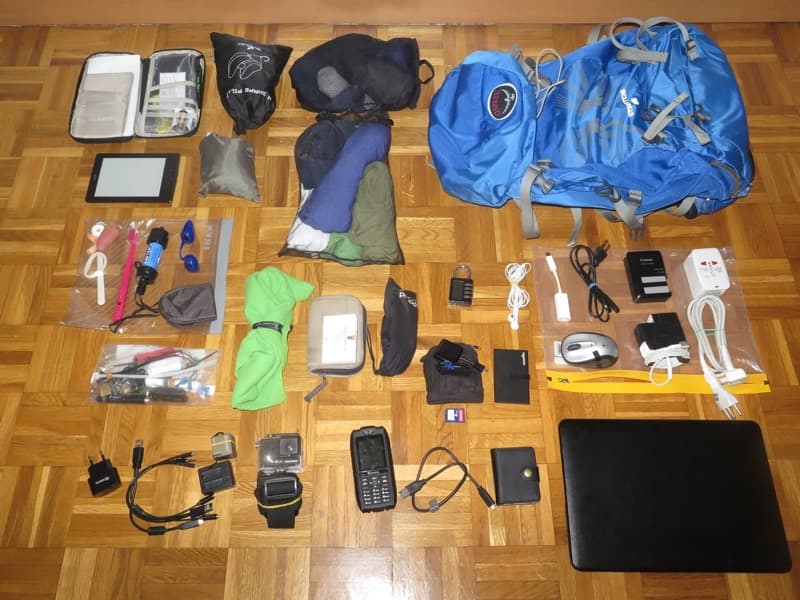
After a few lines of introduction (I hope it helped you :)), here is my PERSONAL ESSENTIAL list of items I think a digital nomad needs to have with him/her in the backpack (for a Sout-East Asia trip).
| Item | Weight (g) |
| Osprey Stratos Backpack 36L | 1310 |
| Cheap lightweight micro foldable backpack | 81 |
| H shape pillow (much better than the classic U shaped one) | 180 |
| Tech: | |
| MacBook Pro 13, hard shell and cover | 1980 |
| Canon PowerShot SX730 camera, charger & spare battery | 580 |
| External Backup Disk 1TB (the best on the market in 2018) | 30 |
| Kindle | 171 |
| MacBook Pro Charger | 350 |
| Action camera (GoPro-like), accessories & spare battery | 270 |
| Universal electrical plug (travel adapter) with USB | 90 |
| Various USB sticks & SD cards | 50 |
| Various cables, charger, headphones… | 70 |
| Mac Thunderbolt-Ethernet adapter (very important to have) | 30 |
| Logitech Bluetooth mouse (MX master) | 80 |
| Clothes: | |
| 4x Oeko-tex and organic boxers | 240 |
| 1 pair of shorts | 137 |
| Swimming suit | 170 |
| 2x pair socks (1 tiny 1 big) | 60 |
| 2x Sleeveless shirt | 220 |
| 1x long sleeves shirt | 155 |
| Documents: | |
| Docs, photocopies, photos,… | 90 |
| Notepad and pen (small one) | 50 |
| 50x Business cards | 45 |
| Cheap wallet ready “to be stolen” | 30 |
| Basic accessories | |
| Toiletries (toothbrush, dental floss... that's it) | 42 |
| Microfiber towel | 90 |
| Extra secure lock (don't spare money on that!) | 60 |
| Cheap but UVA/B protection Sunglasses | 35 |
| Emergency kit (all can be left behind): | |
| Spare batteries: 1x AAA, 1x AA and 1x button 2032 | 39 |
| Cheap Mini Torch (5 cm) | 30 |
| Tiny screwdrivers set (to open your MacBook Pro) | 40 |
| Mini sewing kit (surely all this cheap material will break :) | 19 |
| 5m string (important to dry clothes) | 30 |
| Fire starter (depending on your trip) | 50 |
| Life-straw | 47 |
| TOT | 6951 |
and directly on you when you travel:
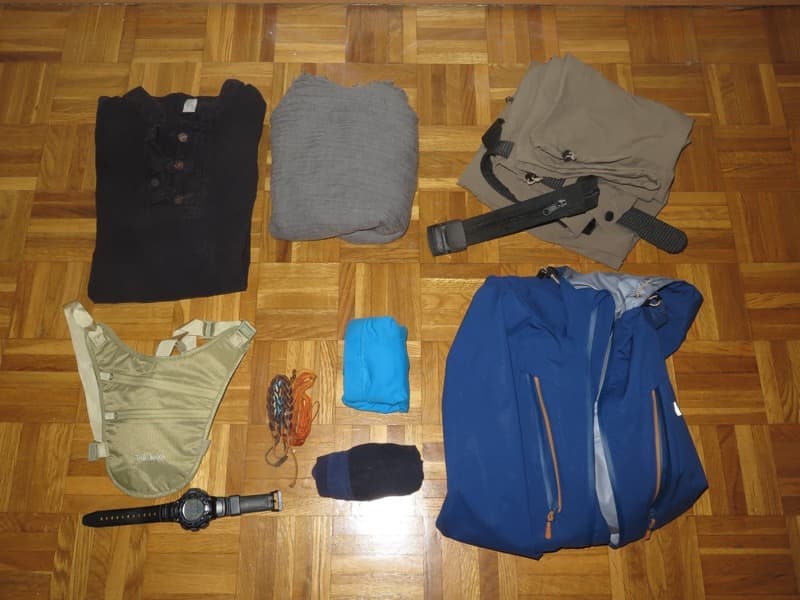
| Item | Weight (g) |
| Scarf | 141 |
| Tatonka Hidden Armpit wallet (cash, CC,…) (a must!) | 54 |
| Cheap, lightweight and waterproof jacket | 365 |
| T-shirt | 190 |
| Full-of-functions Casio watch | 50 |
| Hidden wallet belt | 150 |
| 1x Oeko-tex and organic boxer | 60 |
| Long-short (detachable) trousers | 386 |
| 1 pair socks | 35 |
| Comfortable sneakers | 396 |
| A rough phone (not a smartphone) | 120 |
| Passport and its black cover | 100 |
| TOT | 2047 |
Roughly 2 Kg on you and 7 Kg on your backpack.
The only thing that I would buy in loco it's a pair of sandals or flip-flop :).
Travel the World: DON'T plan your Trip, you will be stronger [Hardcore Travelers]
I decided to travel the world for about 6-7 months. I wanted to pack all my items into a small backpack (7 Kg max).
Well.... all into this small guy here...
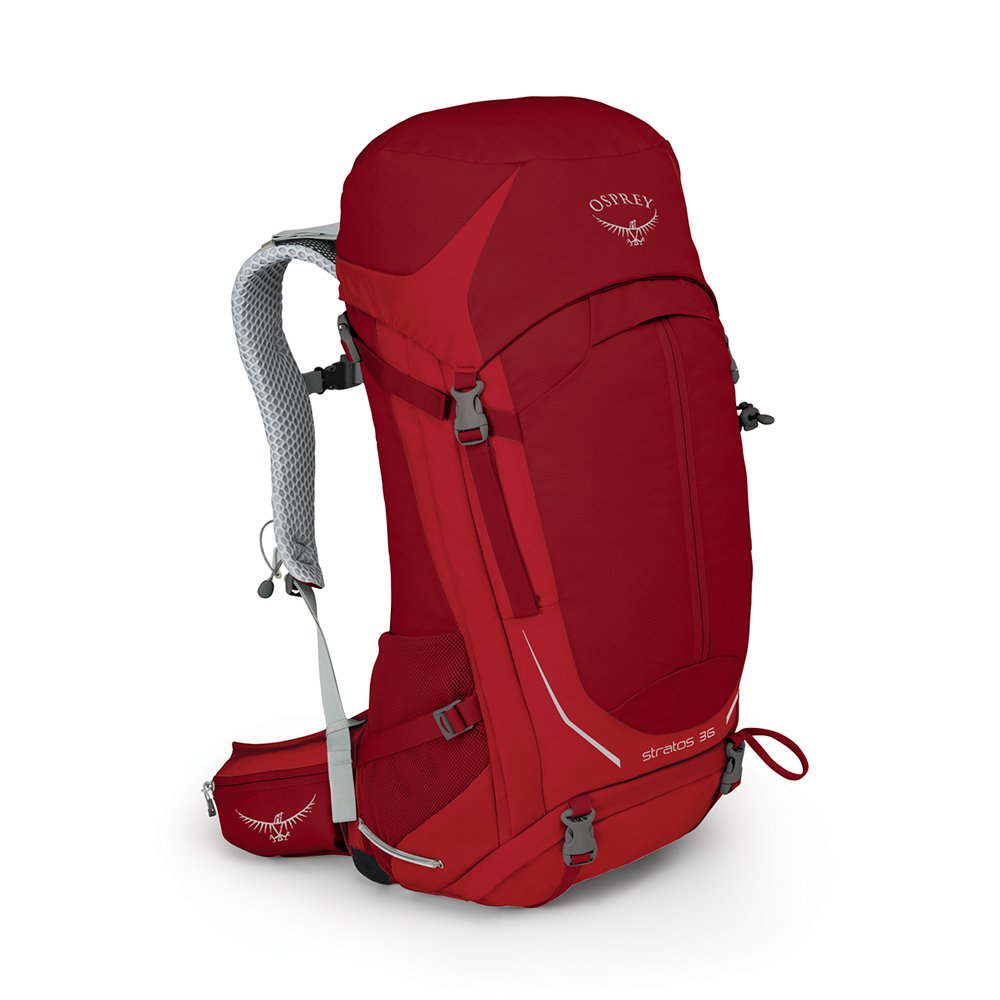
This allowed me to be more lightweight and quick while moving around. I listed on this post the items that I put on my essential 7 Kg backpack for a 6-months South-East Asia travel. There is also a female version of a minimal 7 Kg backpacking list that you can read here.
The current post is about the Aha! moment I had while packing them into it :). It's a must read if you are preparing your backpack for a long world journey. There are various ways how to travel the world but if you pack tons of stuff in your backpack you will leave only half of your trip. I will explain you why.
Ready?
Let's go!
The most important question when you travel the world
First, a question for you: what do you think is THE most important thing when packing your belongings for a long world travel (e.g. 6 months)?
.... time for thinking.....
Hard to come to just 1 answer eh?
There is just one that is now popping out of my head and it took me some time to figure it out.
When you travel the world, it all boils down to the main questions:
- what is your journey to you?
- what do you want to achieve with your trip?
- How do you want to be transformed after your journey?
Chances are that each and every person has a different answer to those questions.
I love to travel the world, it's a pure life's objective to me.
But something is for sure...
You may believe that paying a huge amount of money to a psychologist will get an arachnophobe magically recovered. You would be wrong. The only way to stop his fears and anxiety is for him to face spiders.
Dot. There is no other way.
It won't happen magically and, soon or late, after a bunch of talks and grants, also the guy on the chair will tell him to get up from the comfy bed and face some spiders.
The same way, if you are a bit insecure, the only way for you to do the change that is to face uncertainty, the unknown, and your fears. Bit by bit, step by step but you need to do it.
The same way, if you have a bit of obsessive-compulsive disorder, only by leaving behind what gives you comfort will eventually get you recovered.
To put it differently, by getting yourself into troubles and by winning some important personal challenges you will become stronger and better. Challenge by challenge, eventually, your self-perception will improve and chances are that your insecurities or obsessions will fade away.
But why is this related to my travel objectives or to my travel around the world?
Well.. it is. Very much.
How a minimal backpack will make you stronger
We live in a complex and strange world. Skills, abilities, human strength, stamina and advanced brain functions get the more and the more weakened. Technology, companies' objects and "blue pills" gained terrain and became the "standard".
The less you will bring with you, the more skills you will need to put on the plate to compensate the lack of those objects to get you out of troubles. Consequently, you will gain more experience and become stronger, more experienced and mature.
And... after all, if you are like me, you are going into a land where people carry ladders on a scooter, driving without helmet and smiling at you like there was no tomorrow!!!

Why am I saying that? How is this related to my Aha! moment while packing my items for my Asia travel?
Keep calm and continue reading... I almost finished weaving my canvas and I'm coming to the point.
First, an interesting point about.... your brain!
Your brain is not accurate enough when predicting future events

When your brain tries to predict future events or situations, it does that mainly in 2 ways.
a) using your existing framework of reliable and well-anchored memories and experiences.
When you try forward thinking, your brain is trying to imagine and interpret a future reality using present information already there in your head. The problem is that, no matter how hard you try, you will rarely get enough accurate to the reality.
This is because the reality is composed of multiple and often complex factors and variables. In addition to that, some of those variables can't be predicted or don't depend on you (ie. you have no control over them).
For instance, if you have never been to Asia but you know that "the climate is warmer over there", you tend to imagine that reality starting from the current, known one.
If you live in France, you would tend to imagine Asia as a "warmer France" or with more mosquito.
To put it simply, your brain is lazy and tends to voluntarily forget or not to take into account all the details. The thing is that all those details summed together form the big climate difference between Asia and France (ie. humidity, smog, pressure, other animals, smells, perfumes etc.).
Also true that it's hard to accurately imagine Asia's climate if you have never been there... so, you will probably also rely on...
b) external information coming from different sources (e.g. a friend, colleague, book, a blog,... etc.). This external information will trigger subjective mental representations of Asia's climate.
At least 3 unfortunate and problematic events occur while this happens:
i) some variables just can't be represented at all (ie. how would you form a mental representation of Thai roads' smell from a Documentary or friend's tale?).
ii) a documentary has a point of view. It can tell you something and not revealing something else (that may be of core importance for you). A colleague can omit details about his trip to make it appear more appealing to you.
A close friend could simply have more sensitivity or having decoded the reality in a more profound way. Even more profound than how much you would ever be capable of. All in all, it's hard (or impossible?) to communicate an experience in a "pure" way.
iii) once it receives the information from the external source, our brain further and slightly modify it before storing it in memory (and continues to modify it when it's there too :)). Those are complex mechanisms that I don't want to describe here but it's related to our personal reference framework, core belief system, etc).
If you want to know more about how your brain is lying to you or falsifying some information here is a good article about it.
A bit of summary of what's above
To sum up, as external information get in, our brain constructs a subjective representation of that information. That representation is almost never 100% accurate. This is because, at least, for the 3 points above.
I approach the conclusion of this post so here is a summary for you:
a) you should clear up your travel's objectives and purposes. They will influence how you pack your backpack;
b) fact: to recover from being e.g. an insecure person, you need to first exit your comfort zone, challenge yourself, win, fail and learn;
c) fact: we live in a complex world where for any need there is a quick and easy pill as a surrogate for your amazing brain;
d) the less you carry with you, the more challenges your brain will have to compensate for the lack of tech, artifacts, tools, objects etc that you don't bring with you.... De facto, making you a more experienced and mature person;
e) I had an Aha! moment, in which I discovered that my skills were useless as the problem was my "forward thinking";
f) short piece about how the brain works when we forward-thinking and the problems related to that :);
g) ... and here is the conclusion of this long post.
Conclusion
My Aha! moment revealed to me an important thing. No matter what you "forgot" or voluntarily left home, it will eventually result being a good thing for you as a person. The NEED is the mother of all solutions and also a brilliant spark for creating wonderful experiences!
By leaving most of your stuff behind, you will create that need. You will only have your brain to solve the issue or compensate the artifacts, object and techy equipment that you didn't bring with you. E.g. Let's assume you didn't bring your mosquito net and you end up in a hotel that doesn't have one. The only solution you have left, if you really need one, is to deal with locals. Borrow one or ask where you can buy one in the near environment. Or even find an alternative solution as isolate you in the room and kill all the mosquito around.
To put it differently, the need will push you to employ and train your relational or trading capabilities, communication skills and troubleshooting abilities. Also, you will gain experience, generate wonderful memories and exercise your brain's basic and advanced functions.
Last but not least, when you travel, you often find yourself in a completely different setting, environment and/or society. You will need to deal with different people, usages, costumes and conditions, becoming more flexible and open-minded.
All in all, this small trick of "not-forward thinking" will let you immerse yourself into that NEW reality and, if you are humble enough, learn, mature, share, exchange, feel... in other words, you will really live your travel and the travel is living within you!